The Founder's Dilemma: Why "Everything" is the Enemy of Everything
In the early days of a startup, the "growth at all costs" mentality can be a double-edged sword. It is tempting to chase every market opportunity, implement every feature request from a power user, and fix every bug that pops up. However, this "all-in" strategy is often the fastest route to failure.
When a startup attempts to manage multiple initiatives simultaneously without a strict framework, the result is almost always strategic dilution. This phenomenon occurs when the product becomes a "Frankenstein"—a collection of disjointed features that fails to solve any one problem exceptionally well.
For a founder, the challenge is not just about technical execution; it is about resource allocation and psychological discipline. You have a limited budget, a small engineering team, and a finite amount of time. Every hour spent building Feature B is an hour not spent perfecting Feature A.
To avoid the trap of "feature bloat," you need a Product Portfolio Playbook. This is not just a to-do list; it is a strategic framework that dictates what you build, what you delay, and what you kill.
Categorizing the Portfolio: The Strategic Hierarchy
To manage multiple initiatives without losing focus, you must first categorize them. Not all product requests are created equal. A common mistake is treating every feature request with equal urgency.
Instead, you should structure your product portfolio into three distinct tiers. This hierarchy helps the leadership team make objective decisions based on impact and effort.
1. The Core (Must-Haves)
These are the non-negotiable features that define your product's value proposition. If you remove these, the product ceases to function as intended.
* Goal: Customer acquisition and retention.
* Example: For a ride-sharing app, the "Book Ride" button and the payment gateway are Core. For a project management tool, the ability to create and assign tasks is Core.
* Action: These initiatives must occupy the top 80% of your sprint capacity.
2. The Enablers (Strategic Investments)
These are initiatives that don't directly generate revenue but are critical for the long-term health and scalability of the product. They are often boring but essential.
* Goal: Technical debt reduction, infrastructure improvement, and performance optimization.
* Example: Migrating from a monolithic database to microservices, implementing a robust logging system, or redesigning the user authentication flow for security.
* Action: These should be scheduled during "maintenance windows" or dedicated sprints, separate from feature development.
3. The Future Bets (Nice-to-Haves)
These are "moonshot" ideas that sound exciting but are not critical for the immediate future. They are often the result of brainstorming sessions or investor feedback.
* Goal: Innovation and future market expansion.
* Example: Adding a dark mode toggle or a social sharing feature for a utility app.
* Action: These should be placed in a "Future Roadmap" backlog. They should only be moved to the active queue if the Core and Enabler initiatives are fully satisfied.
By strictly enforcing this hierarchy, you ensure that your team is always building the "Core," while keeping the "Future" on the radar without distracting the engineering team.
The MoSCoW Method: Prioritization in Practice
Once you have categorized your initiatives, you need a method to prioritize them within those categories. The MoSCoW method is a simple yet powerful framework used by elite product teams worldwide.
It stands for:
* Must have
* Should have
* Could have
* Won't have (for now)
How to Apply MoSCoW to Early-Stage Startups
Let’s look at a real-world scenario. You are building an MVP for a food delivery startup. The product team receives ten requests in one week.
- Must Have: Users must be able to search for restaurants by cuisine type. (Without this, the app is useless).
- Must Have: Users must be able to add items to a cart and checkout via Stripe.
- Should Have: The ability to save favorite restaurants for later. (Great for retention, but not for the initial launch).
- Should Have: Email notifications when the order is confirmed. (Good UX, but SMS is easier to implement).
- Could Have: A loyalty points system.
- Could Have: Integration with Google Maps for real-time driver tracking.
- Won't Have (for v1): Food photography upload feature.
- Won't Have (for v1): Split bill payment.
The Result:
Your development team focuses 100% of their energy on the "Must Haves." The "Should Haves" are scheduled for the next sprint or phase. The "Could Haves" are parked. The "Won't Haves" are documented as feedback for future versions.
This prevents the "scope creep" that often kills early-stage startups. You are saying "no" to good ideas to say "yes" to great ideas.
The "One Thing" Rule and the MVP Mindset
A critical component of managing a portfolio is maintaining the MVP (Minimum Viable Product) mindset. Even after you have launched, the temptation to overbuild is constant.
The "One Thing" Rule suggests that your product should have a singular, clear purpose. If a new initiative doesn't directly support that singular purpose, it should be rejected.
Practical Example of the One Thing Rule
Imagine you are building a B2B analytics dashboard.
* Current State: You have a dashboard that shows user engagement metrics (Core).
* New Initiative: A marketing team asks for a feature that generates PDF reports for stakeholders.
* The Conflict: This is a "Should Have" or "Nice to Have," but it dilutes the focus on the dashboard's primary function: data visualization.
The MachSpeed Approach:
Instead of building a complex PDF generator immediately, the team might build a simple "Export to CSV" feature. This solves the user's need (stakeholders want data) without requiring a massive engineering effort that detracts from the core product.
By adhering to the MVP mindset, you validate assumptions with the simplest possible product. You do not build the "ideal" product; you build the product that proves your hypothesis is correct.
Resource Allocation: The Bottleneck Reality
In software development, the team member with the least amount of time is the bottleneck. For early-stage startups, this is often the founder or the lead developer who is wearing multiple hats.
Managing multiple initiatives requires strict resource allocation. You cannot have three different features being worked on in parallel by the same limited team.
The "WIP" (Work In Progress) Limit
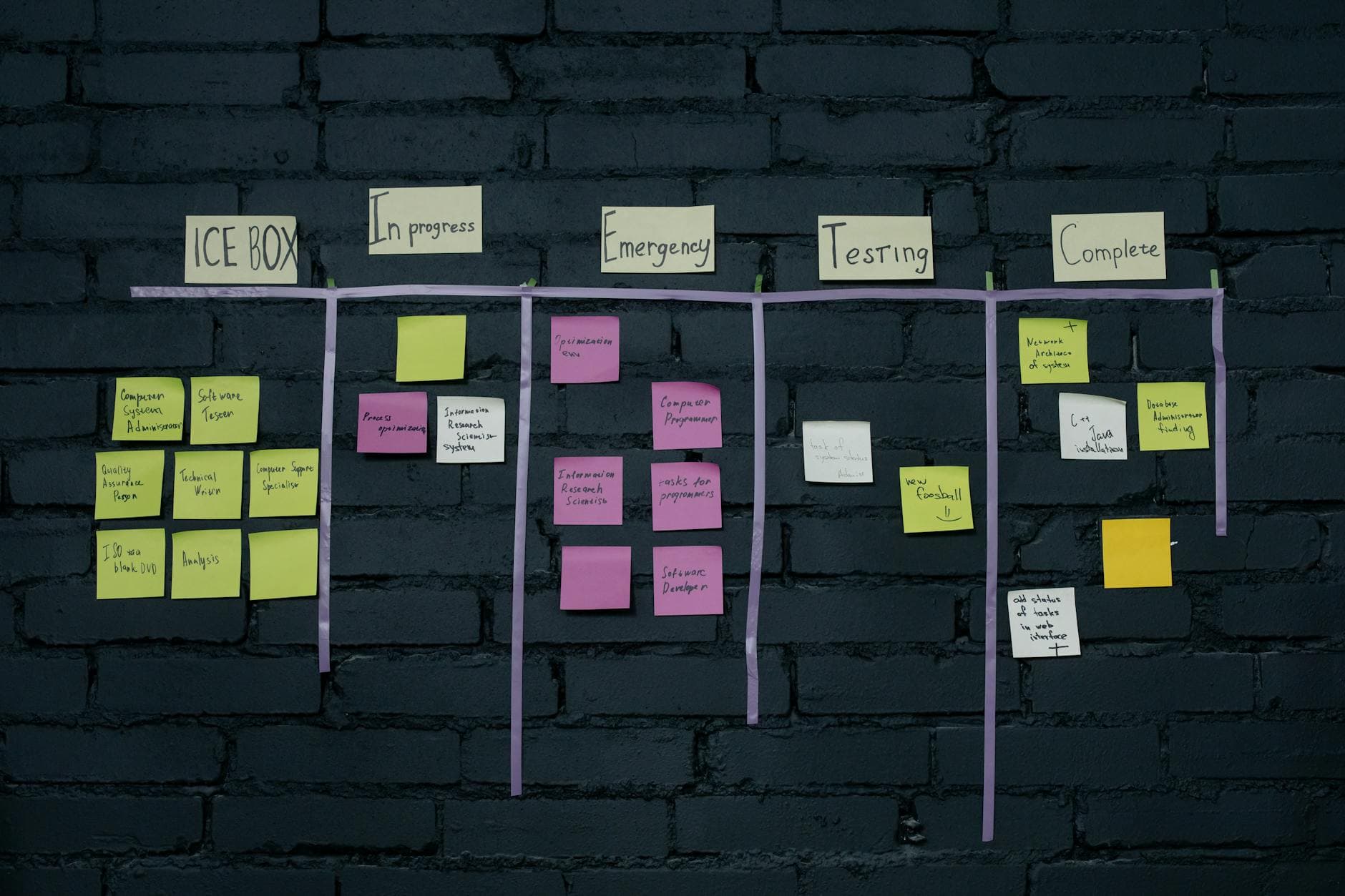
Implementing WIP limits is a Lean methodology practice that helps teams focus. A WIP limit dictates the maximum number of items a team can work on at one time.
* Scenario: Your engineering team consists of three developers.
* Unlimited Scope: Feature A (2 devs), Feature B (2 devs), Feature C (2 devs). Result: Massive delays, context switching, and buggy code.
* With WIP Limits: Feature A (2 devs), Feature B (1 dev), Feature C (0 devs). Result: Feature A is finished quickly. Feature B starts immediately. Feature C waits.
By limiting the number of active initiatives, you reduce context switching. Context switching is expensive; studies show it can reduce productivity by up to 40%. When you focus on one thing at a time, the quality of the output improves, and the speed of delivery increases.
The Kill Switch: When to Cancel an Initiative
Perhaps the hardest part of managing a portfolio is knowing when to kill an initiative. Founders often fall in love with their ideas and struggle to cut them, even when data suggests they are wrong.
Every product portfolio needs a Kill Switch—a pre-defined set of criteria that triggers the cancellation of a project.
Criteria for a Kill Switch
- Market Validation Failure: User testing shows zero interest in the feature.
- Technical Infeasibility: The estimated effort is 10x higher than initially estimated, threatening the timeline.
- Strategic Misalignment: The initiative no longer fits the "Core" definition as the market evolves.
Example of a Pivot
A startup initially builds a complex mobile app for local events. After three months of development, they realize users are not downloading the app. However, they discover that the landing page content is getting high traffic.
The Kill Switch Action:
Instead of continuing to build the app (wasting resources), they pivot. They kill the app initiative and shift resources to building a newsletter or a simple web platform.
This is not a failure; it is a success of data-driven decision-making. It allows the startup to preserve cash and pivot to a channel where the market is actually responding.
Measuring Portfolio Health
How do you know if your portfolio management is working? You need to measure the health of your product initiatives, not just the features themselves.
Key Performance Indicators (KPIs)
- Feature Velocity: How many "Must Have" features are delivered per sprint? A consistent velocity indicates a focused team.
- Time to Market: How long does it take to go from idea to production? Reducing this time is a sign of better prioritization.
- User Retention: Are users staying because the product is now better, or are they leaving because the new features are confusing? High retention rates suggest you haven't diluted your value proposition.
By tracking these metrics, you can see the tangible impact of your portfolio decisions. If retention drops, it is a signal that you may have introduced too much complexity too soon.
Conclusion: Focus is the Ultimate Competitive Advantage
Managing multiple initiatives without diluting focus is a discipline, not a strategy. It requires the courage to say "no" to good ideas so you can say "yes" to great ideas.
By categorizing your portfolio, applying the MoSCoW method, enforcing WIP limits, and maintaining a strict MVP mindset, you protect your startup from the trap of feature bloat.
The startups that win are not the ones that build the most features; they are the ones that build the features that users love the most. That focus requires a disciplined product portfolio.
Ready to build a focused MVP that scales? At MachSpeed, we specialize in helping early-stage founders cut through the noise and build products that matter. Contact us today to build your competitive advantage.